

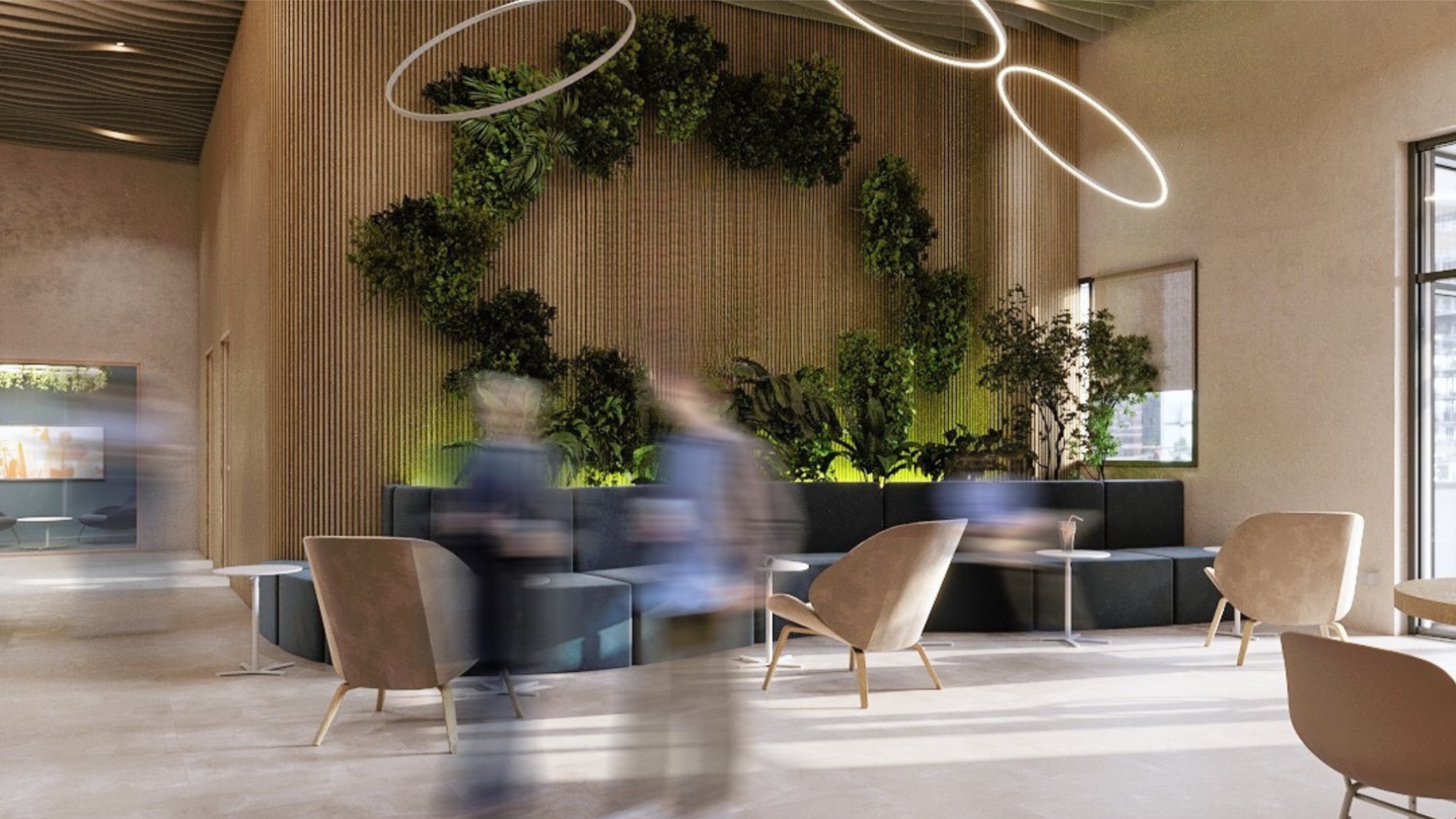
Over the past few years, “increase workplace interaction” has become the default answer to almost every workplace problem.
- Low innovation? Increase interaction.
- Weak culture? Increase interaction.
- Hybrid work not working? Increase interaction.
But research (and experience) shows something counterintuitive: pushing people to interact more often can actually make them withdraw.

Research on Workplace Interaction
Studies of open offices found that when visibility and exposure increase, face-to-face interaction drops by as much as 70%. At the same time, people retreat into email and messaging to protect their focus and privacy.
Instead of collaboration, we get social vigilance. Instead of creativity, we get self-protection.
The problem isn’t interaction itself.
The problem is treating interaction as one single thing.
Human interaction is governed by biology, not buzzwords. Our brains rely on different neurochemical systems – oxytocin, dopamine, endorphins, and cortisol – depending on whether we’re bonding, learning, coordinating, or creating. Each system has different spatial needs, different safety thresholds, and different failure modes.
Paradox of Interaction
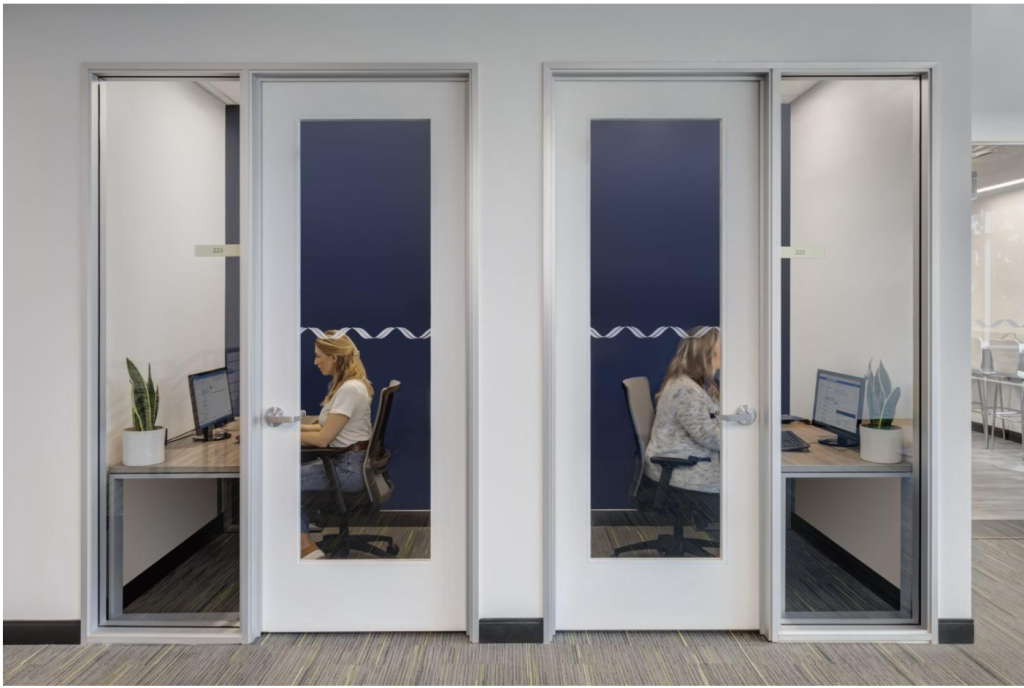
The more people are pushed to interact while protective boundaries are removed, the more exposed they feel – and the less they participate.
Open, evident environments often trigger social vigilance:
- Who can see me?
- Who can hear me?
- Who might interrupt?
- How am I being evaluated?
Instead of freeing interaction, this state raises cognitive load, increases self-monitoring, and drains social energy. Withdrawal becomes a rational protective response.
This is why “increase interaction” without definition is risky.
Interaction is NOT One Thing
Interaction is often treated as a single, generic behavior. In reality, it takes fundamentally different forms, each governed by different rules and spatial needs.
Designing for one type often weakens another.
Below, we’ll break down four fundamentally different types of interaction and why designing for all of them at once usually backfires.
1. Serendipitous Interaction
(Unplanned, informal, low-commitment interaction)
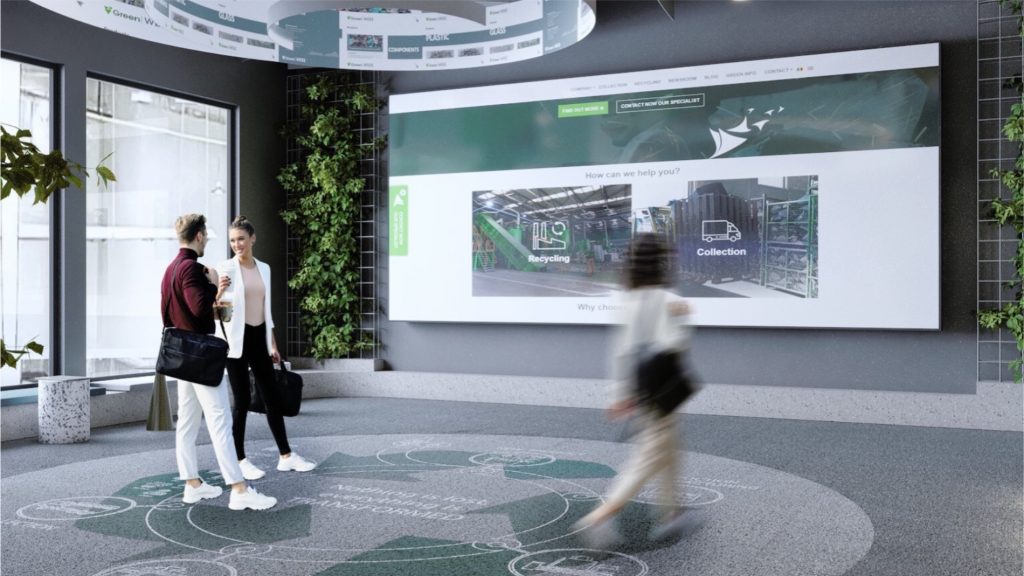
Serendipity is often reduced to “bumping into people”. But chance alone is not enough. Serendipitous interaction depends on three conditions:
- Chance
- Overlapping movement
- Shared paths
- Natural friction
- Context
- Shared points of interest
- Visible work
- Relevance of overlap
- Cues
- Permission to linger
- Nooks and edges
- Tactical privacy
When visibility exists without permission or context, people pass through quickly. When movement is optimized purely for efficiency, overlap disappears. When everything is exposed, lingering feels risky.
2. Coordinated Interaction
(Meetings, alignment, decision-making)
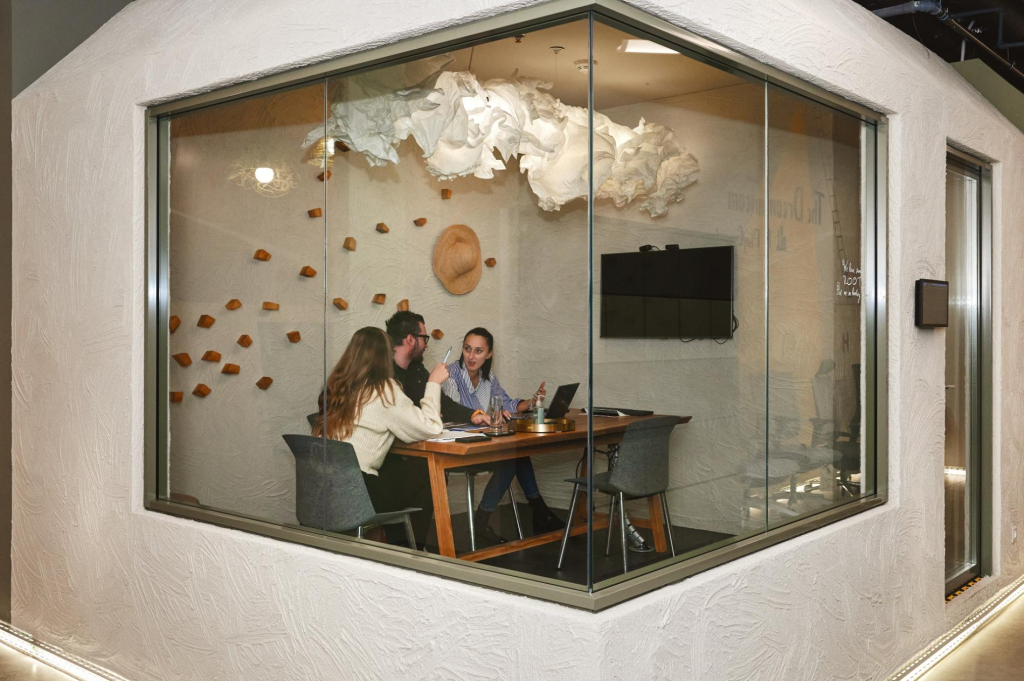
Coordinated interaction requires clarity and safety, not openness.
Common design failures include:
- Low privacy in meeting rooms
- Glass walls without visual control
- Open collaboration zones being used for sensitive discussions
Lighting rigidity adds another layer of friction:
- Single light temperature
- No ability to shift atmosphere
- Bright environments during dark hours
Without control over light, posture, and visibility, coordinated interaction becomes performative rather than productive.

3. Team Deep & Creative Interaction
(Sustained collaboration, problem-solving, creation)
Deep interaction requires work intimacy.
This means:
- Continuity
- Group privacy
- Psychological safety
Spaces optimized for density and efficiency often fail here. Tight layouts restrict movement, lock people into a single posture, and reinforce a single mindset. When teams cannot reconfigure space, they cannot reconfigure thinking.
Creative interaction does not thrive under constant observation. It needs protection from interruption, not constant stimulation.
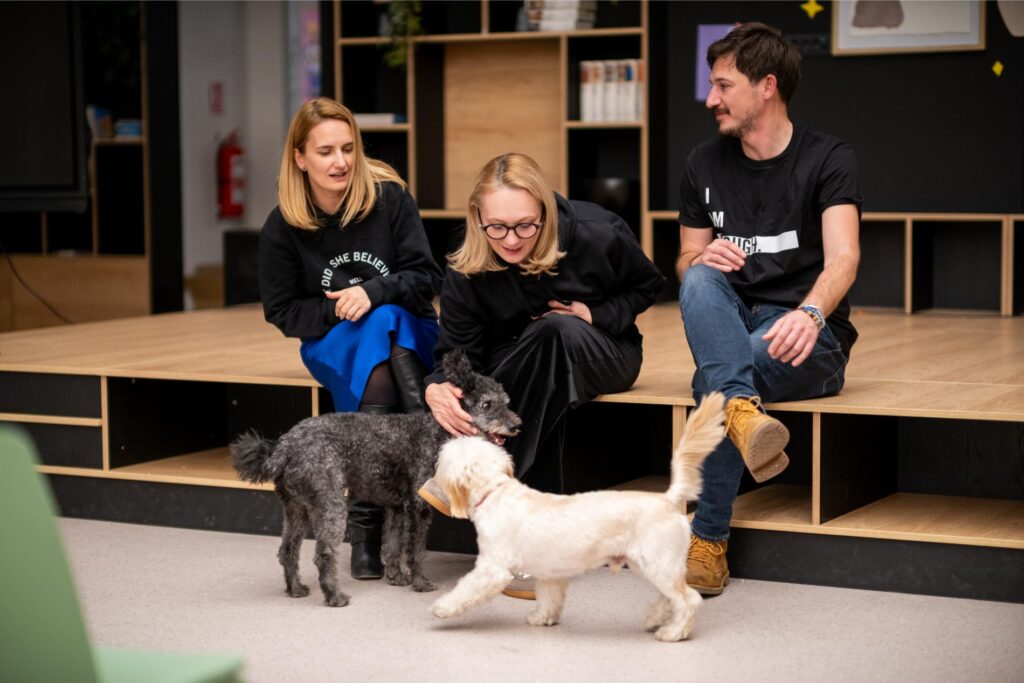
4. Community & Belonging
(Shared identity, rituals, informal bonding)
Belonging is not created through scale. It emerges in smaller, repeated social contexts.
Interaction at this level depends on:
- Spaces with meaning
- Rituals
- Shared identity cues
- Informal, non-transactional encounters
When every space is multipurpose, and every interaction is visible, the community weakens. Formality replaces familiarity. Evaluation replaces ease.
Belonging requires informal settings and group privacy, not stages.
Designing for Workplace Interaction Means Designing for Boundaries
Good interaction does not come from removing boundaries. It comes from designing the right ones.
Effective boundaries create:
- Clear expectations
- Soft transitions
- Meaningful separation
- Protection from distraction
They allow people to shift interaction modes instead of being constantly “on”.
Not sure where to start with your workspace design?
No worries, we’ve got you covered! We’ve created a quick questionnaire to help you pinpoint your priorities, understand your team’s dynamics and preferences, and clarify your business goals.
Click here to fill in our questionnaire! (Scroll until the end of the page).


Share: