
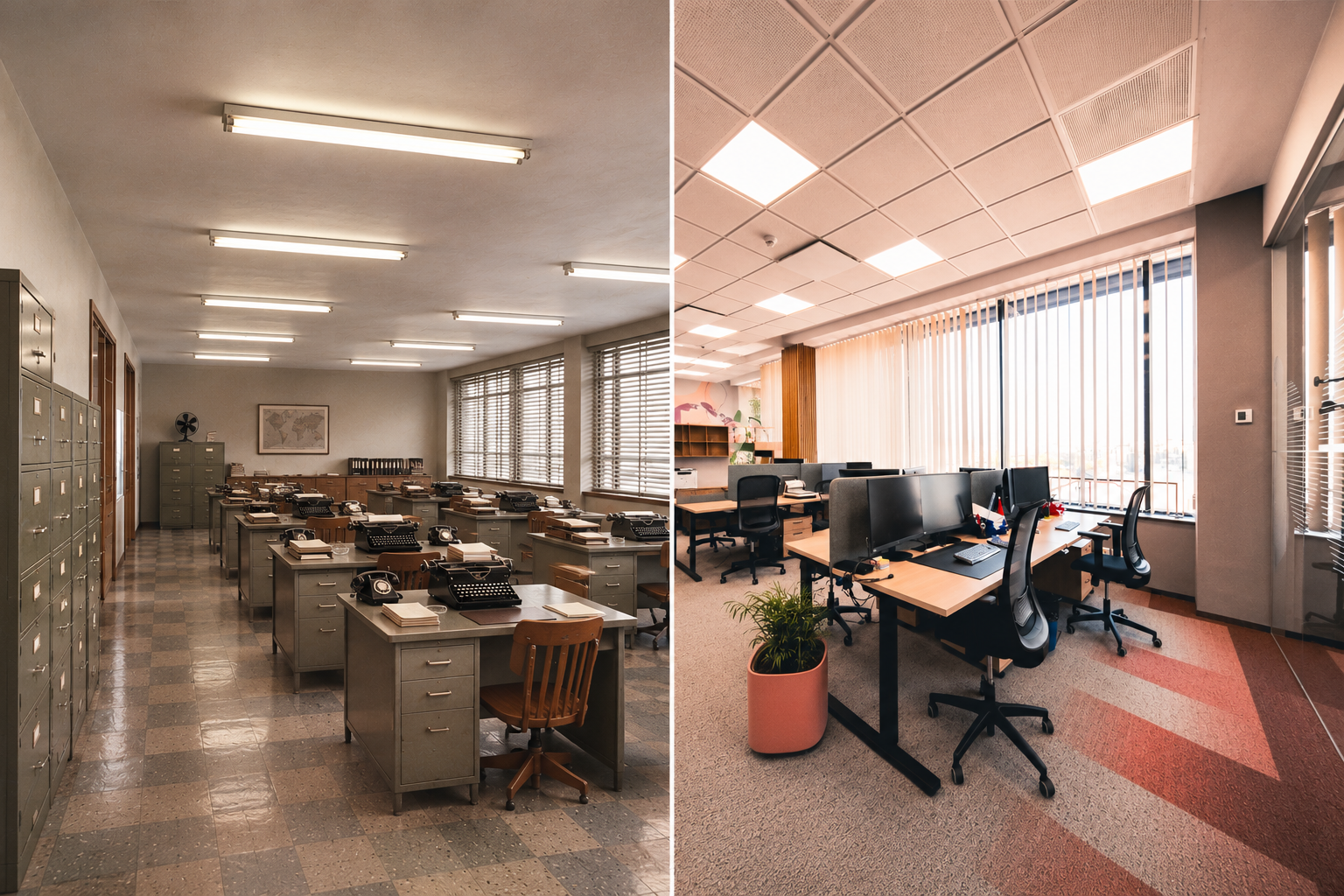
Office design trends are supposed to move forward. In 2020, the headlines agreed that the office was finished. A few years later, companies still argue about hot desks, open plans, plants, and whether anyone needs to come in at all.
It feels like a new conversation. It isn’t. Almost every idea in a modern office brief has been tried before, some of them more than once.
The story of how those office design trends worked, or failed, is more useful than any trend report. Here are five of them, and what each one teaches anyone planning a new office.
1. Open plan, the oldest of the office design trends
In 1906, Frank Lloyd Wright completed the Larkin Administration Building in Buffalo, New York, for a mail-order soap company. A tall central light court brought daylight to every floor. Wright even designed steel chairs that hung from the desks, so the floors were easier to clean.
It was also a product of its era. Rows of desks sat in open view, at a time when office work was organised much like a production line.
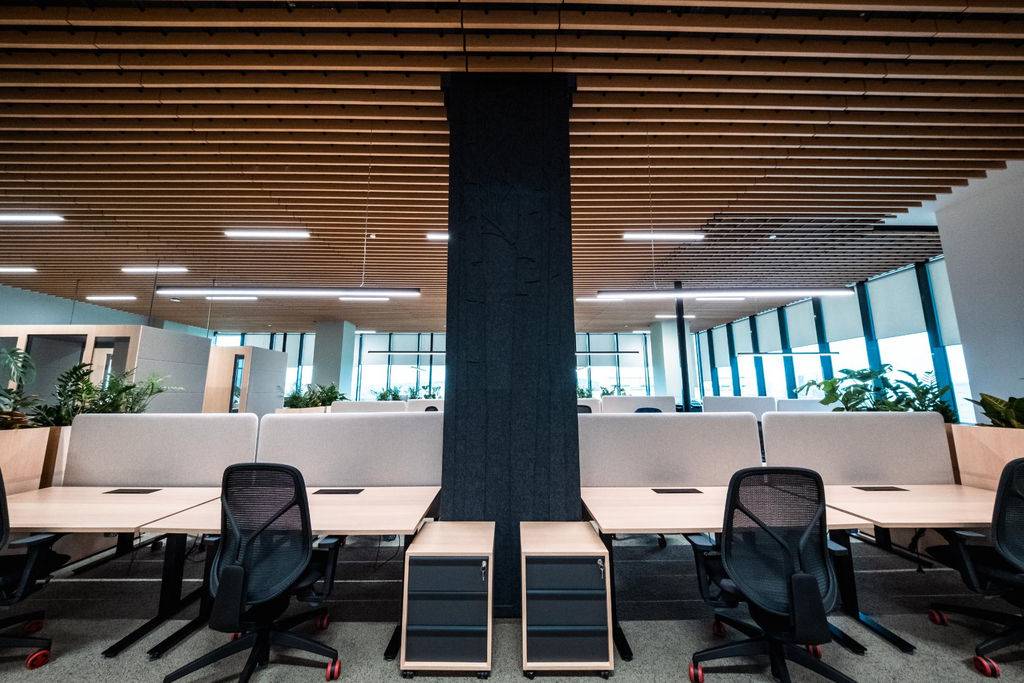
Fifty years later, in Hamburg, the brothers Eberhard and Wolfgang Schnelle and their consultancy, the Quickborner Team, proposed open plan again, for the opposite reason. Their Bürolandschaft, or “office landscape”, threw out the rows.
Desks were grouped by who needed to talk to whom, divided by plants and screens. Managers sat among their teams instead of behind closed doors.
Then the idea travelled. Companies used to command and control gradually straightened the landscape back into rows and bullpens. Of all office design trends, this one shows best how an idea can survive while its meaning disappears.
The lesson: the same floor plan can mean control or collaboration. What decides it is the thinking behind the layout, not the absence of walls.
2. The cubicle was meant to set people free
In 1964, Herman Miller launched Action Office, designed by Robert Propst. He had studied how office work was changing. He disliked uniform offices and people sitting in one position all day.
Its successor, Action Office II, was a kit of panels and components that could be rearranged as an organisation’s needs changed.
Companies did rearrange them, mostly to fit more people into less space. The flexible system became the cubicle farm. In 1997, Propst told The New York Times that “the cubicle-izing of people in modern corporations is monolithic insanity.”
The lesson: flexibility is a tool, and it gets used for whatever an organisation is really optimising for. We’ve seen a smaller version of this ourselves, at a school we designed where desks on wheels stayed in neat rows for three years.
3. Hot desking had its first big crash in 1994
Hot desking is one of the office design trends most people assume began with coworking. It didn’t.
On 4 January 1994, staff at the advertising agency Chiat/Day in Venice, California, arrived to find no assigned desks. A concierge loaned out laptops, and calls were forwarded to wherever people happened to sit.
It didn’t work. Finding a seat and rerouting calls took so long that the agency’s own director of intelligence called the system inefficient. Some people left the company.
Others stuck family photos to their laptops and claimed chairs with signs. Before the end of 1997, the agency had quietly gone back to assigned desks, keeping only the parts that worked.
The lesson: people need some territory. Desk sharing can work, but the versions that last give people a home base, somewhere to keep their things, and a reason to be in a particular place.
4. “The office is dead” is a fifty-year-old headline
Of all the office design trends, leaving the office altogether is the one that has been predicted most often.
After the 1973 oil crisis, Jack Nilles and a research group at the University of Southern California popularised the word “telecommuting”. In 1980, Alvin Toffler predicted the home would “assume a startling new importance”. In 1993, Peter Drucker called the daily commute outdated.
In 2013, Yahoo ended remote work with a memo saying that “some of the best decisions and insights come from hallway and cafeteria discussions.”
Some companies went a long way. By 2009, around 40% of IBM’s employees had no traditional office. In 2017, IBM asked many of them to move closer to their teams, to work “more shoulder to shoulder”.
The lesson: the office never died. But every time people questioned it, it had to earn its place again. Nilles noted that technology wasn’t the limiting factor. The real question was always what the office offers that home can’t.
5. Office plants: the right idea for the wrong reason
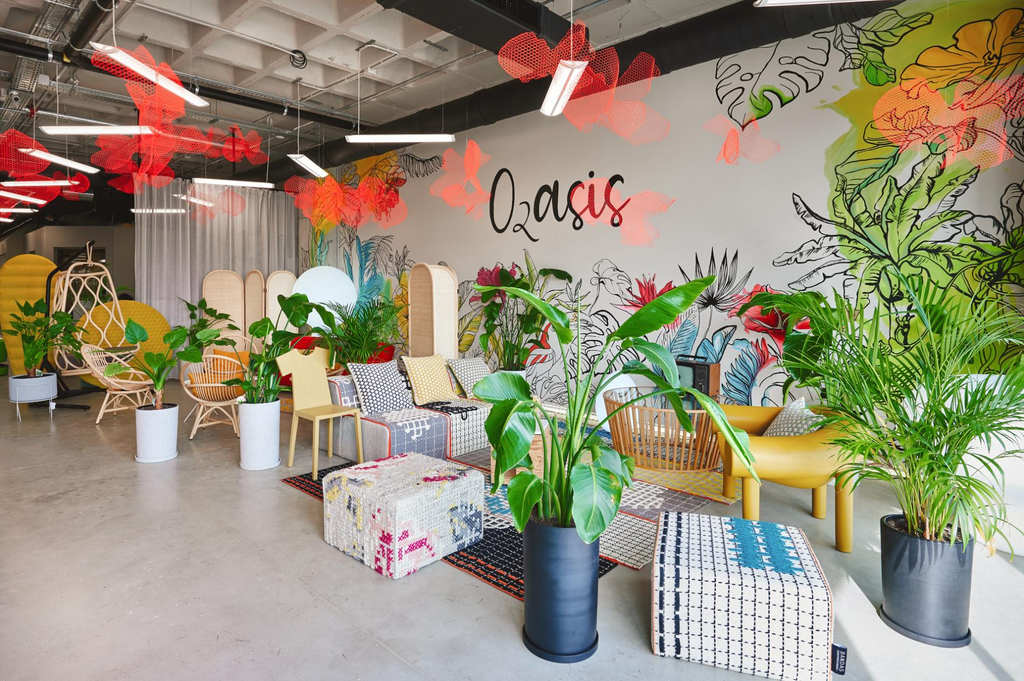
Plants were part of the office landscape from the start, used as dividers and to make large open floors feel more human. They have outlasted most office design trends since.
In 1989, a NASA study tested how well houseplants removed pollutants from sealed chambers. “Plants clean office air” became one of the most repeated facts in design.
Later research was less generous. A 2019 review by researchers at Drexel University found that lab results don’t translate to real buildings with normal ventilation. You would need far more plants than any office could hold.
Plants still belong in offices. People like being around them, and that is reason enough. They just aren’t an air purifier.
The lesson: a good idea with a weak justification is fragile. When the justification falls apart, the good idea is often thrown out with it.
Why office design trends keep coming back
Office design trends return because the tensions underneath them never go away. Contact against concentration. Flexibility against belonging. Cost per square metre against what people need to do their best work.
Every generation finds a new answer, gives it a new name, and the cycle starts again.
The office design trends that lasted had one thing in common. They started from how people actually worked in that organisation, not from how the trend said they should.
Bürolandschaft at its best was a map of real communication. Chiat/Day kept the parts its people actually used. The versions that failed were usually copied whole from somewhere else.
How to judge new office design trends before you adopt one
So the next time one of the new office design trends lands in your inbox, it’s worth asking three questions:
- What problem did this solve the last time it was popular?
- Is that our problem?
- What do our people actually need the space to do?
That’s the approach we take with every brief. Before deciding between open and closed, assigned and shared, we look at what the space needs to do for the people in it, and what has already been tried.
Start from your people, not the trend
If you’re weighing up a new layout and want to start from your own people rather than the latest office design trends, our short questionnaire is a good first step. You’ll find it at the bottom of our office design page.
Share: